
Best IPTV Malta for Multi-Device Households: How Many Screens at the Same Time Really Work?
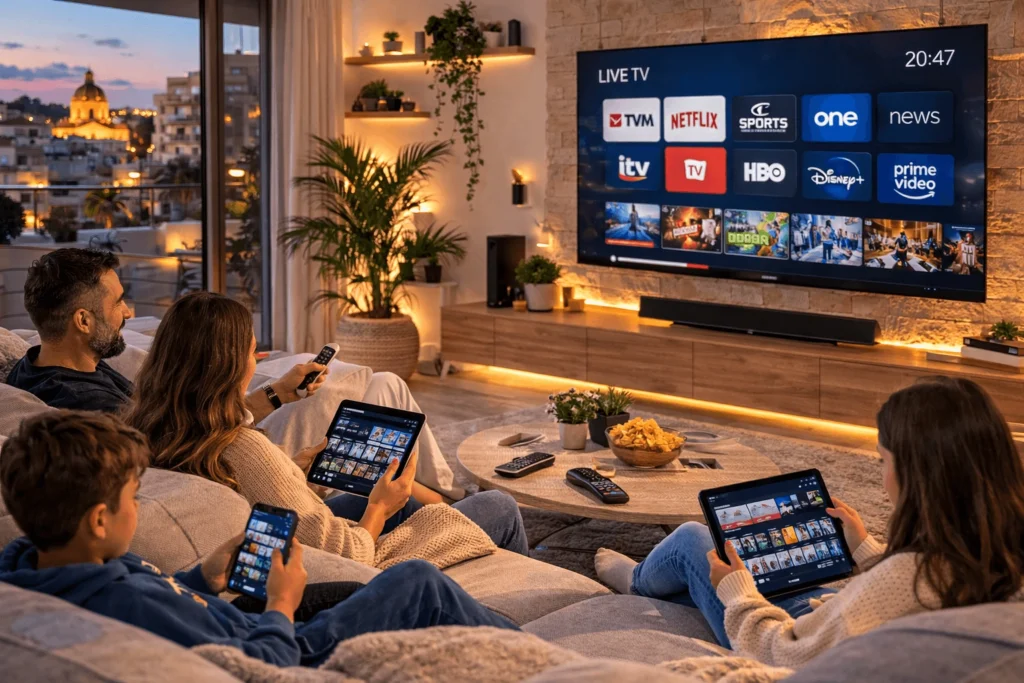
Modern households in Malta rarely gather around a single television the way families once did. In many homes today, one family member might be watching a live football match on the living room Smart TV while another follows a series on a tablet in the bedroom and a third catches up with international news on a smartphone. This is the reality of multi-screen family life, and it raises a practical question for anyone considering an IPTV service: how many devices can realistically watch at the same time, and what does a household need to make that work reliably? This guide examines how multi device IPTV Malta setups function, what the typical limits are, and how families can get the best possible experience across all their screens.
Why Multi-Device IPTV Matters for Maltese Households
The shift toward multi-screen viewing in Malta reflects broader changes in how families consume entertainment. Children, parents, and grandparents in the same household often have entirely different viewing preferences and schedules. A subscription that only supports one screen at a time creates conflicts and frustration in a home where several people want to watch different things simultaneously.
For families using IPTV as their primary television solution, multi-device support is not a luxury feature but a basic practical requirement. Understanding how it works, and what conditions are needed to support it, helps households make informed decisions about which IPTV subscription Malta option suits their size and habits.
Devices Commonly Used for IPTV in Malta
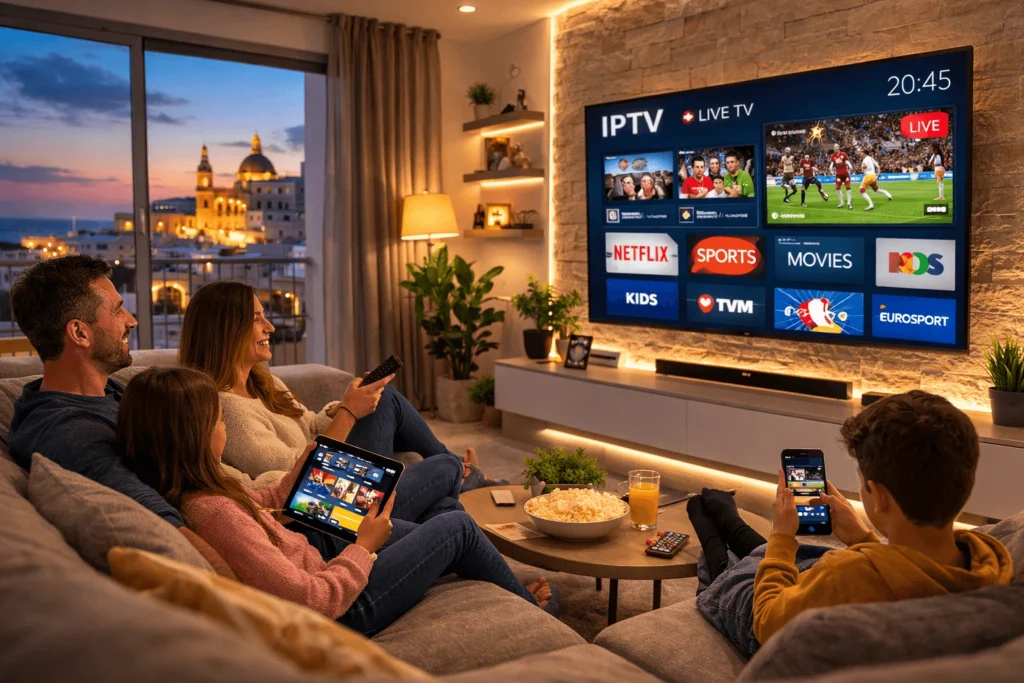
The range of devices used for IPTV viewing in Maltese homes reflects the variety of ways family members engage with content. Smart TVs are the most common starting point, providing a large shared screen in the living room or main bedroom. Android TV boxes, often referred to as IPTV box Malta devices, are used alongside or instead of Smart TVs, particularly in rooms where the television predates the Smart TV era.
Tablets are widely used by children and teenagers for personal viewing, especially for cartoons, series, and on-demand content. Smartphones are increasingly used by adults for watching during commutes, at work, or when travelling, extending the household’s IPTV access well beyond the home’s physical boundaries.
Each of these device types is compatible with popular IPTV applications such as IPTV Smarters Pro, meaning the same subscription can theoretically serve all of them simultaneously, provided the subscription plan supports the required number of concurrent connections.
How IPTV Multi-Screen Streaming Works
An IPTV subscription operates by granting a set of login credentials that are used to authenticate access to the service’s servers. Each time a device opens the IPTV application and begins streaming, it opens a connection to those servers. The number of connections permitted at the same time is determined by the subscription plan selected.
Some providers count each simultaneous stream as a separate connection, while others count active sessions differently. The practical implication is straightforward: if a subscription allows two simultaneous connections and three family members try to watch at the same time, the third will be refused access or shown an error until one of the existing streams is closed.
This is why understanding connection limits before choosing a subscription is an important step for any family considering multi device IPTV Malta streaming as their household solution.
Typical Number of IPTV Screens Supported
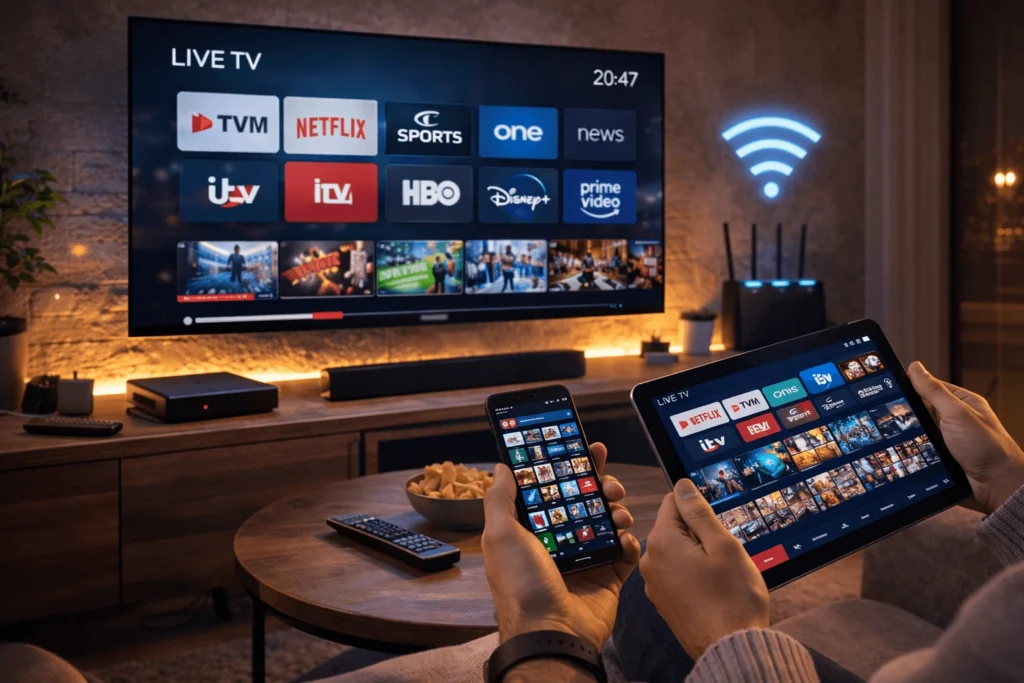
IPTV subscriptions are generally structured around a tiered connection model. A single-connection plan is the most basic offering, suited to individuals or couples who rarely need to watch on more than one device at a time. It is the most affordable entry point but quickly becomes limiting in a family environment.
Two-connection plans are a common mid-tier option, allowing two devices to stream simultaneously. This suits smaller households where two people might want to watch different content at the same time, for example a parent watching news on the living room TV while a child uses a tablet for cartoons.
Family or multi-screen plans typically offer three or four simultaneous connections and are the practical choice for households with children and multiple active viewers. Some providers offer even higher connection counts for larger households or for users who want to extend access across multiple residential properties.
When evaluating an IPTV subscription, families should map their realistic peak usage against the plan’s connection limit rather than choosing based on average usage. The relevant question is not how many devices are in the house, but how many are likely to be streaming simultaneously during a busy evening.
Internet Speed Required for Multiple IPTV Streams
The internet connection is the most important infrastructure element for multi device IPTV Malta households. Each simultaneous stream consumes its own share of bandwidth, and the total demand increases proportionally with the number of active devices.
As a general guide, a standard definition stream uses around 4 to 6 Mbps, an HD stream at 1080p requires approximately 10 to 15 Mbps, and a 4K stream demands 25 Mbps or more. A household running three simultaneous HD streams therefore needs a connection capable of delivering at least 30 to 45 Mbps consistently, not merely as a peak figure.
In Malta, fibre broadband services from providers such as GO, Melita, and Epic comfortably support these requirements in most residential areas. Households still on ADSL connections may find that multi-device streaming, particularly at HD quality, places more demand on their connection than it can reliably sustain. For those households, lowering the stream resolution on some devices provides a practical way to manage bandwidth while keeping all connections active.
The consistency of the connection matters as much as its headline speed. A connection that delivers 50 Mbps on average but drops to 10 Mbps during peak evening hours will produce buffering across all active streams simultaneously, regardless of the quality of the IPTV service itself.
Tips for Stable IPTV Streaming on Multiple Devices
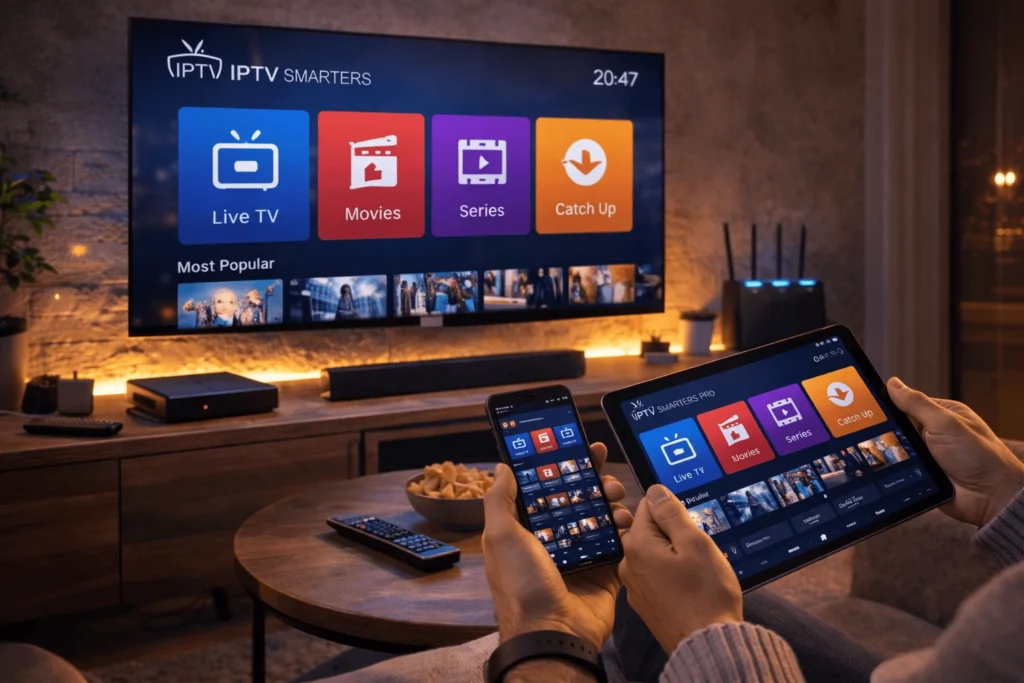
Several practical measures significantly improve the reliability of multi-screen IPTV in a family home. Using a wired Ethernet connection for the devices that carry the heaviest streaming load, typically the living room Smart TV or IPTV box, eliminates the variability of WiFi for those streams and preserves WiFi bandwidth for tablets and smartphones.
Upgrading the home router to a more capable model helps in households where several devices compete for wireless bandwidth. Modern routers with WiFi 6 support handle multiple simultaneous connections more efficiently than older hardware and reduce the congestion that can cause buffering even when the internet connection itself is adequate.
Closing background applications on streaming devices before starting a session reduces the processing and network load on each device, which is particularly relevant on older tablets and smartphones where resources are more limited.
Using a well-maintained IPTV application such as IPTV Smarters Pro also contributes to stability. A reliable player manages buffering intelligently and recovers from brief connection fluctuations without requiring manual intervention, which is especially valuable when multiple streams are running simultaneously.
Timing viewing around peak network congestion also helps. In Malta, evening hours typically represent the highest demand period on residential internet networks, and if scheduling allows, watching non-live content slightly earlier or later than peak hours reduces the risk of speed drops.
How to Choose the Right IPTV Subscription for a Family
Families evaluating IPTV subscription Malta options should consider four practical factors. The first is the number of simultaneous connections supported, matched to the household’s realistic peak usage. The second is whether the subscription includes a mix of content relevant to all family members, from children’s channels and international entertainment to live sport and news. The third is device compatibility, ensuring the subscription works across Smart TVs, Android TV box Malta setups, tablets, and phones. The fourth is the reliability and responsiveness of the provider’s support, which matters more in a household where multiple users depend on the service daily.
Further guidance on subscription options and compatible devices for Maltese households is available at https://iptvmalta4k.com/.
The Malta Broadcasting Authority, which oversees broadcasting standards and viewer protections in Malta, provides publicly accessible information on media regulation that is useful context for families making decisions about their television services.
Conclusion
Multi device IPTV Malta works well for families when the right combination of subscription plan, internet connection, and hardware is in place. The number of screens that can realistically operate simultaneously depends primarily on the connection limit of the chosen plan and the bandwidth available from the home internet connection. For most Maltese families, a plan offering two to four simultaneous connections paired with a fibre broadband service from GO, Melita, or Epic provides a reliable foundation for household-wide IPTV use. Practical steps such as wired connections for primary devices, a capable router, and a well-configured IPTV application complete the picture. With those elements aligned, watching different content on different devices across the same home becomes a straightforward and largely effortless part of daily family life.